Q1. Your philosophy focuses on “meaningful spaces of enduring value”? What is central to your process in delivering on that promise?
To me, lasting design only comes from equally considering the motive and the emotive.
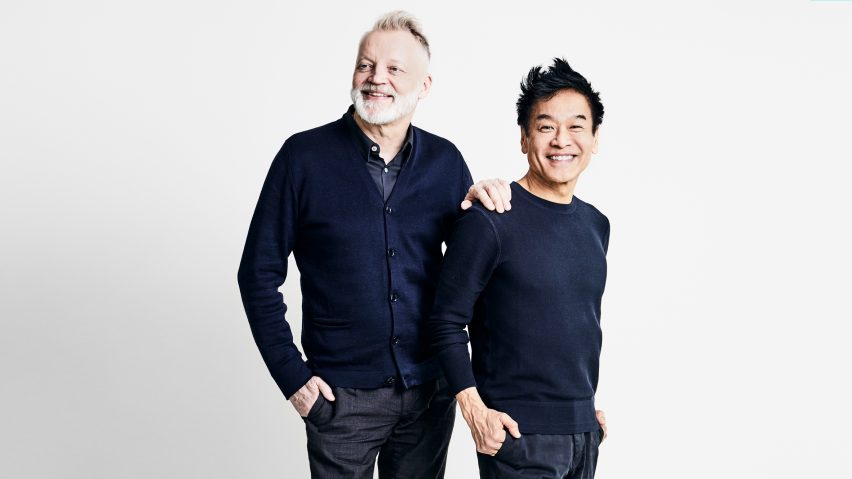
SZ: Design is a process of connecting creative ideas, but ultimately before the creative ideas come, we always start with the questions of “why”? Why a client wants to renovate or create something new, and what is the purpose of that space? What does the owner want to ultimately pass on to the user; how do they want people to feel, to think, to act? All this is central to our process, and many others we have to admit, but ultimately we take this more seriously.
We have developed our own framework that brings alignment on the challenges and opportunities — it tests our team, and the client, to deliver more meaningful and lasting projects. And the approach is straightforward… We put humans at the centre of our work. This is what drives our team — to create spaces that speak to the heart and minds of people immediately upon entering it.
And then there’s the execution… To deliver on our promise, the founders are personally involved in every project. Being a boutique studio, we make sure our time is really devoted to the projects we commit to. Our design leadership flows through the work, and helps transcend projects to the next level. This is a big differentiator from other larger consultancies we’ve worked for previously.
Q2. Can you describe the culture at Stylus Studio?
VZ: Our culture is grounded on the notions of balance, discipline, and being truth-seekers.
Truth-seekers
— Our culture goes beyond a natural curiosity; we use our intelligence and insight to reveal the truth, the authenticity of a space. This means we are great listeners: to our clients, to each other, to the history of the place, to needs of the ultimate users. We not only give our knowledge to a project, but also learn something from every project. Staying inquisitive, staying hungry to learn more, relentlessly so, is a major part of our culture.
Balance
— We’ve also discovered balance is an interesting concept to us, we see it like riding a bike; you need to have balance to move forward. Balance is more than a concept of work/life balance — it can explain everything really. For example, in a project we may want to do something very impressive, but the budget limit is too great. Some people call this sacrifice — but we call this an act of balance. Everything has its limit, and we believe that from friction creativity is born. We aim to balance the challenges and find inspiration and opportunity within that.
Discipline
— All of these words of our culture connect to each other. For example, if you want a balanced life, you need self-discipline. Discipline sounds like a threatening word, and this may also seem like an oxymoron, but to us discipline equals freedom. The more disciplined we are professionally and strategically; the more efficient and trusted we become to operate more independently. That freedom, it’s not about time. It’s from your mind and deeply asking your heart: Is this the best I can do? It’s more about communicating with yourself than working to a fixed physical time. Discipline to us is an attitude to want to do better: to deliver your best work, and best work of the client’s too.
Q3. What inspires, or is most meaningful to you personally today?
VZ: Until the age of 30-something, my life was always about adding on. Every year adding on, trying very colourful experiences and interests. But since starting Stylus Studio, it has been about subtracting. About removing the unnecessary things in my life, and focusing on what matters. It’s about making things simpler, about quality not quantity.
What I think is meaningful to me is sport, family, my love, and career — but all these things overlap now. I shouldn’t say it’s a career, as Stylus Studio is also my family, it’s my life, not just a career. Even when surfing, I’ll start thinking about work, or what I feel on a wave, may come to inspire me in my work. Maybe this is what balance is for me — it’s not about trying to separate these aspects of my life, but finding ways to blend them.
SZ: What Vincent says really echoes with me. Now we have chosen this to be our life, I can’t separate what inspires me, or is most meaningful. The most inspiring things in my life — my wife, kids, love towards my mother, the passion I have for my work — it’s very hard to put one in front of the other as all equally important.
All of what we are discussing here is very human — it’s about connections. Clients are not our family, but for that small, magical point in time, we have a personal connection to them; they trust us and we trust them. We put them first in that part of our life, and I hope they appreciate and feel that too. That’s the cherished opportunity we receive when the client puts their trust in us to work on something meaningful to them. So, in short, the most meaningful thing to me is human connections in every respect.
Q4. Any advice for young designers?
SZ: No matter what you do, try to have fun with it. Another mentor told me; “in life it’s not all rainbows and butterflies”. As a designer, you quite often hear the cries of “I want design freedom”, “I want to create my own style”. But before you can do that, you need to accumulate a lot of knowledge, a lot of foundational knowledge to support your ideas and creativity. Creativity doesn’t just come from your genius mind. At the end of the day, it’s a lot of practice, discipline and accumulation of hard work. So, as a young architect, designer you have to go through somewhat a painful time. No matter what you are assigned to do, no matter if you hate the style, you will always learn something from that process. And try to have fun with it. You will be a better designer once you go through that process — you will have a bigger perspective of design.